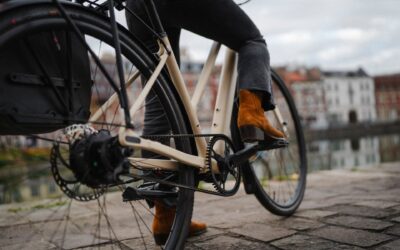
In recent seasons, single chainrings, long reserved for mountain biking and gravel riding, have made their way onto the tarmac. This configuration, often referred to as 1x drivetrain, attracts attention for its simplicity, sleek aesthetics and promise of reliability. But behind the minimalist image lies a real engineering choice, with its advantages, limitations and implications for riding.
The idea of removing the front derailleur and one of the chainrings from a road bike crankset may seem radical. However, with the rise of 12- and 13-speed drivetrains and wide-range cassettes, this solution is now technically viable, even in competitive contexts. It was even seen on certain stages of the 2025 Tour de France, and not just on flat courses: some riders dared to use it in the mountains, proving that advances in equipment are pushing back traditional constraints.
What is a single chainring? Simplified operation
The principle is simple: a single chainring at the front, usually between 42 and 48 teeth depending on the terrain and the cyclist’s power, and a rear cassette offering a wide range of gears. The absence of a front derailleur frees the cyclist from a number of mechanical and mental constraints. Gear changes are made only at the rear, making the riding logic more intuitive: one lever to make the gear harder, one lever to make it easier, and nothing else to think about. This simplicity appeals to both racers and competitive cyclists, especially over long distances where concentration is precious.
This streamlining also reduces potential problems. Changing the chainring, especially on the road, is a moment when the chain is under high tension and has to cross a significant difference in diameter, which increases the risk of hesitation or derailment. Eliminating this operation removes this weakness. Modern chainrings, with narrow-wide profiles (alternating thin/thick teeth), keep the chain in place even on rough surfaces, while clutch derailleurs add constant tension that reduces chain slap.

Why choose a single chainring for road cycling?
Mechanical simplicity
The main argument in favour of 1x is the reduction in controls:
- Only one lever to operate
- Fewer reflexes required to avoid chain crossings
- Fewer adjustments and less maintenance (goodbye to the front derailleur and its sometimes temperamental adjustments)
For amateur cyclists, this simplicity translates into smoother gear changes and fewer distractions.
Increased reliability
Chainring changes are mechanically more demanding:
- Large difference in diameter between small and large chainrings
- Shifting performed on the upper part of the chain, under maximum tension
By eliminating this operation, the risk of chain slippage or irregular shifting is reduced.
Narrow-wide chainrings and modern derailleur clutches ensure near-perfect chain retention, even on rough roads or cobblestones.
Weight and aerodynamics
By removing the front derailleur, a chainring and sometimes the associated cable/servo, you can save 120 to 250 g on a high-end bike.
In terms of aerodynamics, the gain is measured but real: a few watts at high speed. In a time trial or criterium, that’s always worth taking.

Gear range: the real issue
The historical argument against single chainrings on road bikes concerned the gear range. With a double chainring, it is possible to have an ultra-short gear ratio for climbs and a very long gear ratio for sprints, while maintaining small gaps between gears. Modern cassettes have reduced this gap: a 48-tooth chainring combined with a 10-46 cassette offers a range of 460%, which is close to the 494% of a 48/35 setup with a 10-36 cassette. In other words, the difference is small both uphill and downhill.
The weak point remains the spacing. Covering the entire range with a single chainring means accepting larger jumps between two gears. For cyclists who are sensitive to cadence regularity, this can be frustrating, especially on hilly terrain where you quickly alternate between moderate effort and bursts of speed. However, increasing the number of gears mitigates this effect: with 13 gears, the gap becomes acceptable for most cyclists, and some end up not paying attention to it after a few rides.
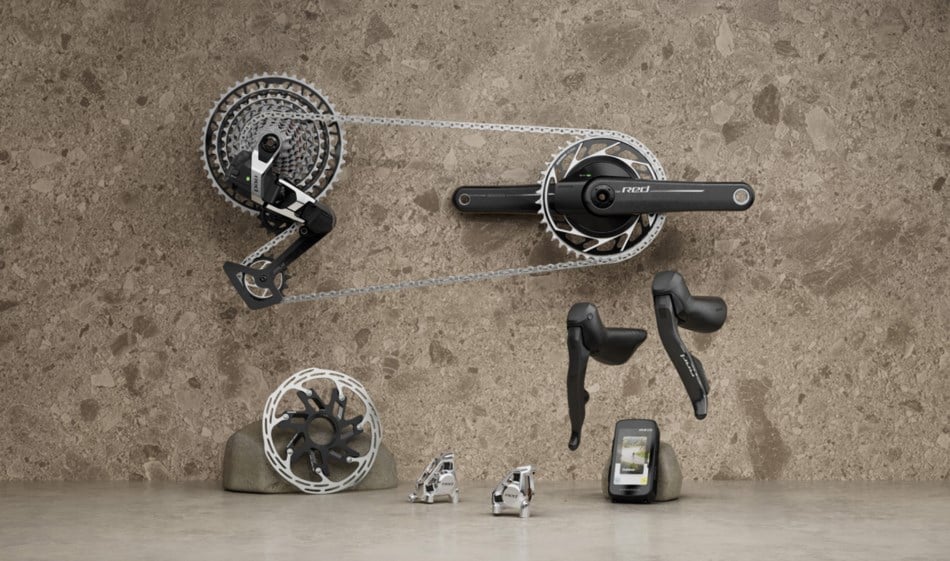
Optimising your single chainring setup for road cycling
Choosing your chainring
- 44 teeth: for mountain biking
- 46 teeth: versatility
- 48 teeth and : flat and high speed
Always choose a narrow-wide profile.
Cassette
- 10-36: hilly roads, competitors
- 10-44: endurance, cyclosportives with mountain passes
- 10-46: gravel and extreme versatility
Front derailleur
- Long cage for large sprocket
- Clutch system to stabilise the chain

A choice linked to profile and practice
It is clear that single chainrings are not for all cyclists. On long mountain stages where versatility is essential, a double chainring retains an advantage. On the other hand, for a criterium, triathlon or ride on relatively even terrain, the simplicity of 1x means less handling, less risk and more direct steering. For commuters or cyclists who alternate between roads and trails, it also guarantees a robust drivetrain that requires less maintenance.
Aesthetics also play a role. Many people find that a road bike without a front derailleur and with a perfectly straight chain line has a modern and aggressive look. And in a world where image is almost as important as performance, this is a significant argument.
A trend that is gaining ground
The fact that professional riders have used 1x on stages of the Tour de France, including in the mountains, marks a shift. However, it should be remembered that these athletes have much more power than most amateurs and benefit from technical assistance during the race. What is viable for them is not necessarily viable for a cyclist who tackles long distances alone without assistance.
In reality, choosing between 1x and 2x is less about determining which is “better” and more about defining which is best suited to your use. The double chainring remains the ultimate versatile solution, but the single chainring is now a mature alternative, offering a smoother, lighter and often more enjoyable riding experience.
Summary:
Principle: a single chainring at the front (38 to 54 teeth) and a wide-range cassette; removal of the front derailleur.
Main advantages:
- Ease of use and maintenance.
- Less risk of derailment thanks to narrow-wide chainrings and clutch derailleurs.
- Sleek look and slight aerodynamic gain.
- Possibility of stiffer frames with more tyre clearance.
Weight: may be lighter than a double chainring, but depends on the choice of components (heavier wide cassettes).
Gear range: now close to that of a double chainring with 12/13-speed drivetrains, but with larger jumps between gears.
Disadvantages:
- Less refined gear spacing, more noticeable cadence variations.
- Less versatile for varied terrain or long climbs.
Who is it for?
- Criterium, triathlon, rides on consistent terrain.
- Commuting or mixed road/gravel riding.
- Cyclists looking for a minimalist and reliable bike.
Market:
- SRAM: leader and comprehensive range for 1x road.
- Shimano: limited options, adaptations via GRX.
- Campagnolo: Super Record 13 high performance.
Trend: occasionally adopted by professionals, even in the mountains, but choice should be evaluated based on usage and not simply imitation.

FAQ – Single chainring road bike
Is a single chainring suitable for mountain biking?
Yes, if you choose the right gear ratio (for example, a 46-tooth chainring with a 10-46 cassette). This will give you the same gear ratio (1:1) as with a small 34-tooth chainring and an 11-34 cassette. However, a double chainring remains more versatile with finer gear spacing for long climbs.
Will I lose maximum speed with a 1x?
Not necessarily. A 50/34 double chainring with an 11-34 cassette will have a maximum gear ratio of 9.71m (50×11), which is equivalent to a 46×10 that develops 9.82m per pedal revolution. With a 46-tooth single chainring and a cassette starting at 10 teeth, you can ride at speeds comparable to a double chainring.
Does a single chainring save weight?
In most cases, yes, but the gain may be reduced by the weight of wide cassettes and long cage derailleurs.
Does it wear out the chain faster?
Wear is comparable to a double chainring if the drivetrain is well maintained. The chainline is optimised, but the wide-range cassette may put more stress on the extreme gears.
Can a single chainring be fitted to any road bike?
You must check the compatibility of the crankset, rear derailleur (UDH or non-UDH) and cassette (11, 12 or 13 speeds).
Why don't all pros ride 1x?
Because on certain stages, particularly hilly or mountainous ones, the double chainring allows for more consistent gearing and greater versatility. The choice depends on the profile and strategy.
Is a single chainring suitable for commuting or bikepacking?
Yes, it’s even an excellent option for daily commutes: fewer parts, less maintenance, simpler and more reliable gear changes.
![Origine unveils the Newton[e]: the lightest electric bike in the world (9.83 kg)](https://cyclisthouse.origine-cycles.com/wp-content/uploads/2026/02/Newton-400x250.jpg)