Valentin Van Overloop is an experienced ultra-distance cyclist, having completed several prestigious events in the Bikingman and Race Across Series championships. As a member of the Origine team, he shares his advice and experience on how to succeed in such a demanding race.
Overview
Could you introduce yourself in a few words?
My name is Valentin Van Overloop, I’m 33 years old and I’ve been working at Origine as Digital Manager since late 2024. I live 30 minutes from Lille, in northern France.
I’ve been cycling for about fifteen years, first on a mountain bike, then on the road. However, I only started competing in ultra-distance races two years ago. Since then, I’ve taken part in six Race Across events: Belgium (x3), France (x2) and Paris.
What motivated you to take part in a Race Across?
I’ve always been drawn to endurance challenges. Taking part in an adventure like this allows you to push your physical and mental limits whilst enjoying a unique experience. It’s a real test of management skills over several days, combining performance, strategy and perseverance. Race Across events are also an opportunity to discover magnificent, often little-known landscapes.

Training and physical preparation
How do you prepare for an ultra-distance event such as Race Across?
To take part in such an event, it’s essential to build up your endurance and clock up the hours on the bike. I usually take part in several BRMs (Brevet de Randonneurs Mondiaux) and events on the CRM Classics Tour, which take place in Belgium in the spring, with routes ranging from 100 to 200 km. I also do “intensive weekends” with two to three long rides in a row to train my body to withstand fatigue.
During the week, I plan shorter but targeted training sessions, with hill work to tackle elevation gain, or high-intensity sessions on flat terrain to improve power output.
I cycle to work a lot. It’s a good way to clock up the miles without affecting my personal or professional commitments.
I also pay close attention to the quality and duration of my sleep, which are essential for proper recovery.
Mental preparation and motivation
What are the biggest psychological challenges during an ultra-distance race?
The biggest psychological challenge lies in coping with the night. The human body isn’t naturally built for running at night. I feel more vulnerable and, generally speaking, I experience more fatigue and a greater need for breaks compared to other competitors.
How have you developed strategies to cope with moments of doubt and extreme fatigue?
My mental preparation begins with creating a roadbook, which allows me to visualise the route, organise my refreshments and anticipate areas with limited water or food supplies. I also identify suitable spots for night-time rest and the main difficulties along the route. During the race, I mentally follow the route step by step according to my roadbook.

Equipment and choice of bike
Which bike would you recommend for this race and why?
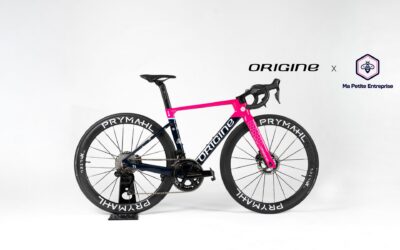
I recommend a bike that absorbs vibrations well but is still high-performing, such as the Axxome Ultra, which is very versatile on both flat terrain and climbs. It’s a very comfortable road bike, even over long distances, particularly with Prymahl carbon wheels in 35 or 48 mm rim height. I also appreciate the option of fitting tyres with a 32mm (up to a maximum of 35mm) profile to maximise comfort.
What equipment have you opted for (wheels, drivetrain, saddle, lights, etc.)?
I pay particular attention to lighting, with a good headlamp and a front light powered by a dynamo wheel, such as the Prymahl Orion C35 PRO Dynamo SON, which is perfectly suited to ultra-distance riding.
I ride with aerobars to improve comfort and save energy on the flat sections. Their effectiveness in ultra-cycling is well established.
In your opinion, what is the most crucial piece of kit for success in the Race Across France?
A GPS with good battery life, a high-performance lighting kit that’s also self-powered, and a quality pair of cycling shorts tested and approved during training, preferably with side pockets like the Origine cargo shorts.

Logistics and race management
How did you plan your route and your stops? What sleep strategy did you follow?
As for sleep, I prefer to stop at night for 1 to 2 hours, depending on how tired I am and the format of the race. This allows me to recharge my batteries properly, both physically and mentally. Generally, I stop for longer than the other competitors to sleep, but this allows me to ride faster the following day and catch up with those who have had less rest. During the day, I make sure my stops are as short and efficient as possible.
How did you manage your nutrition and hydration during the race?
I try to limit sugary foods during the race to avoid blood sugar spikes and digestive issues. I prefer fatty and savoury foods: cheese, almonds, raisins, cashews, cured ham, sandwiches, sushi. I stock up at convenience stores, which usually offer enough choice without wasting too much time searching.
Experience of racing in the Race Across France
What were the most difficult sections of the 2025 route?
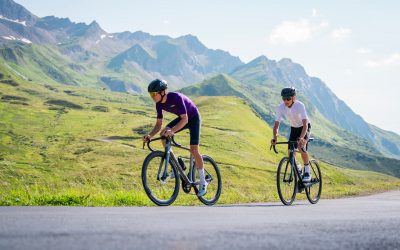
Day 2 was particularly tough, as I had to tackle the Col des Champs and the Col de la Cayolle, a key point in the race, during the hottest part of the day. We had to cope with temperatures exceeding 35 degrees.
Did you encounter any major unforeseen events? How did you deal with them?
The major unexpected challenge of the 2025 race was clearly the heat. From 11am until 2.30pm, I really struggled during the first few days. I had to stay well hydrated and douse myself with water accordingly. With experience, it’s better to slow down the pace to avoid overheating. A well-planned route allows you to anticipate the water stations.
What was your best moment or your greatest satisfaction during the race?
My favourite moment was as the second night approached, with a stunning sunset at the summit of the Col de la Bonette, one of the highest mountain passes in Europe. Between the silence, the vastness of the mountains and the light fading as we climbed, the atmosphere was soothing.
Did you ever feel discouraged? How did you find the strength to carry on?
Yes, there were moments of doubt, but I always reminded myself that every step I took brought me closer to my goal.

Feedback and advice
Looking back, is there anything you would have done differently in your preparation?
In winter, I’d like to be able to train in the south of France or Spain for a week or two. Winters in the north are long and wet, which makes it difficult to maintain a good training rhythm without getting fed up. It would also help me prepare better for the elevation gain.
What advice would you give to someone wanting to take on the Race Across France?
I recommend starting with intermediate distances, such as 300 km or 500 km, to test yourself. For the longer formats (1000 km and 2500 km), it’s essential to learn how to spend two full nights outdoors, as that’s where the difference lies compared to the other distances.
What is your next challenge after this race?
In 2026, I’ll be at the start of the Race Across France and the Race Across Spain.