Ultracycling, a discipline that pushes cyclists’ physical and mental limits to the extreme, is a daring and rewarding adventure. For those considering taking the plunge and participating in their first ultracycling event, careful preparation is the key to success. In this article, we’ll explore in detail the various aspects of preparation, from choosing a race to post-event recovery.
1. How to choose your race?
What race format: 300, 500, or 1,000 km?
The first crucial step is to choose the race that best suits your level of experience and your goals. Distances generally range from 300 km to 500 km and even 1000 km. The longer the race, the more sleep management becomes a factor in performance. If you’re afraid of riding at night, opt for a 500 km race to start with. It’s also important to consider how much time you’ll have available this year to prepare for your race.
Road or gravel ultra race?
The choice between a road or gravel race depends on your personal preferences and experience. Road races are more accessible technically and physically. The advantage of a gravel route lies in the absence of motor traffic. The terrain is wilder and generally even more beautiful. However, gravel races are typically farther from major cities, which limits access to aid stations or accommodations if you plan to stay overnight. They’re also harder on your body and equipment, making technical knowledge of bike repair a must.
The Race Across label: a guarantee of safety
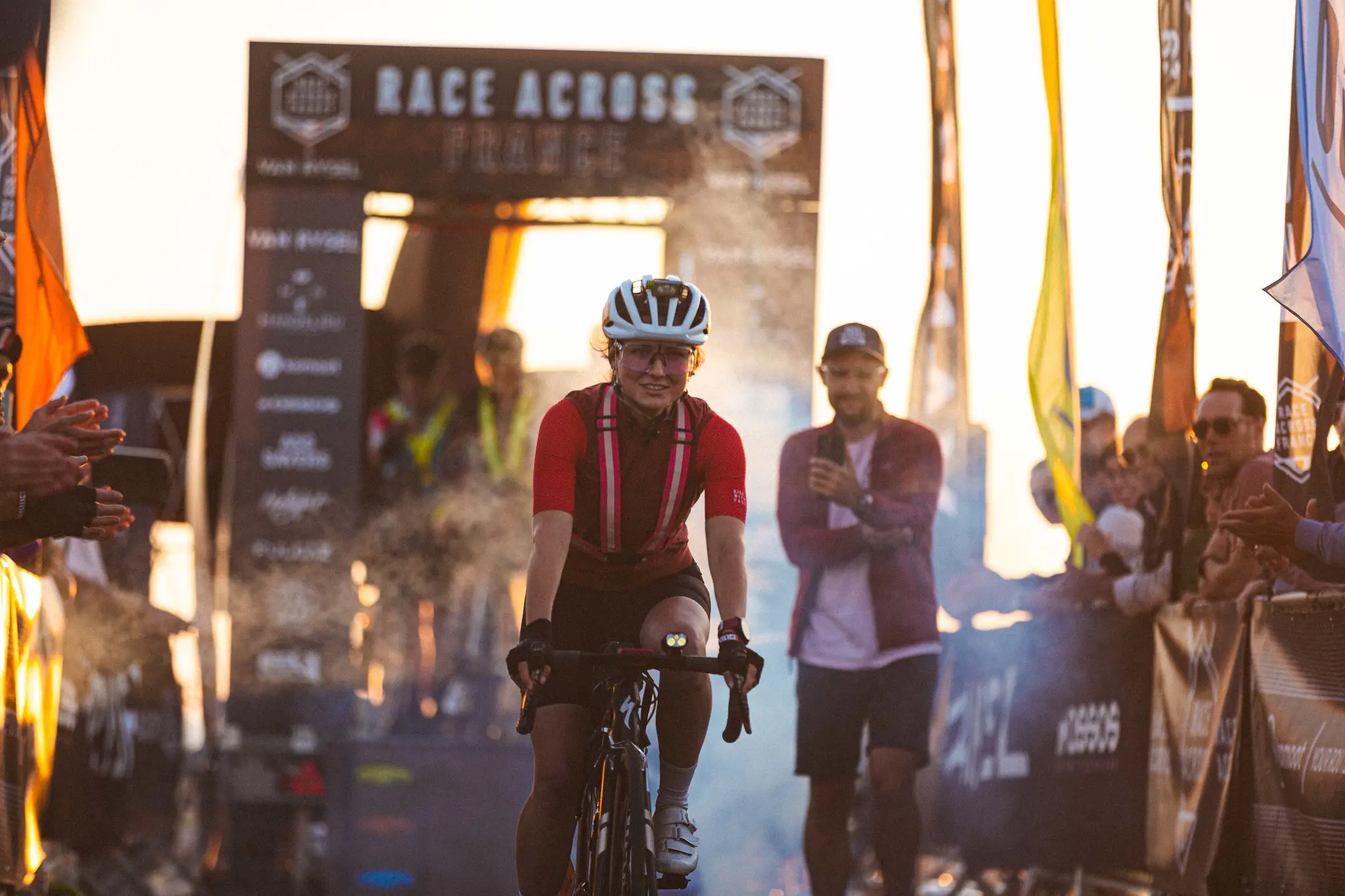
Race Across-certified races are often considered safe bets in terms of organization and safety. Organizer Arnaud Manzanini pays close attention to safety. Beyond all the administrative paperwork required to avoid being classified as an “unregulated” event, the Race Across organization provides actual support stations along the route and professional supervision.
Don’t schedule your race too early in the season
Finally, when choosing your race, avoid scheduling it too early in the season to give yourself enough time for proper training. It’s best to allow six months to prepare for your first ultra race if you’re already a regular cyclist.
2. What about mental preparation?
Mental preparation is crucial to success in an ultracycling event.
Learn to ride slowly
Learn to pace yourself by riding slowly and forget about the clock. Take it easy and enjoy the scenery. This requires a complete shift in mindset to embark on the adventure. Physically, if you can ride 100 km at 25 km/h, you’ll surely be able to ride 200 km at an average of 20 km/h. Ultra-endurance riding requires that you never increase your intensity. Avoid sprinting or powering up hills. Above all, be patient.
Track your data, but only at the beginning
Get started with tracking watts if you have a power meter, or monitor your heart rate to manage your effort. This data can help you adjust your effort and identify moments of euphoria that could prove detrimental a few hours later. However, after the second day, learn to trust your intuition, as your metrics may drop drastically to the point where you no longer have any reference points. You must then listen to your body and adjust your effort, sometimes even stopping to rest before setting off again.
Riding at Night
Long-distance cycling offers a unique experience: riding at night. It’s a whole new environment. The sensation of speed is amplified, and managing your battery life becomes essential. You can ride at relatively low power levels when climbing a pass since your speed will be very low, but you’ll need plenty of power on the descent. For winding roads, a headlamp will be more useful than a fixed light, since the light will follow your gaze. You must therefore test the types of lights, their power, and their battery life for night riding.
Checking Your Gear
As mentioned earlier regarding lights, it is important to thoroughly check your equipment. Having no doubts about your equipment choices frees your mind and allows you to tackle the challenge with confidence and peace of mind. It’s also helpful to have an organization system in your panniers. If your belongings are always in the same place, you’ll feel more at ease and be able to pack up faster during your stops.
3. What kind of physical training?
Increase the distance
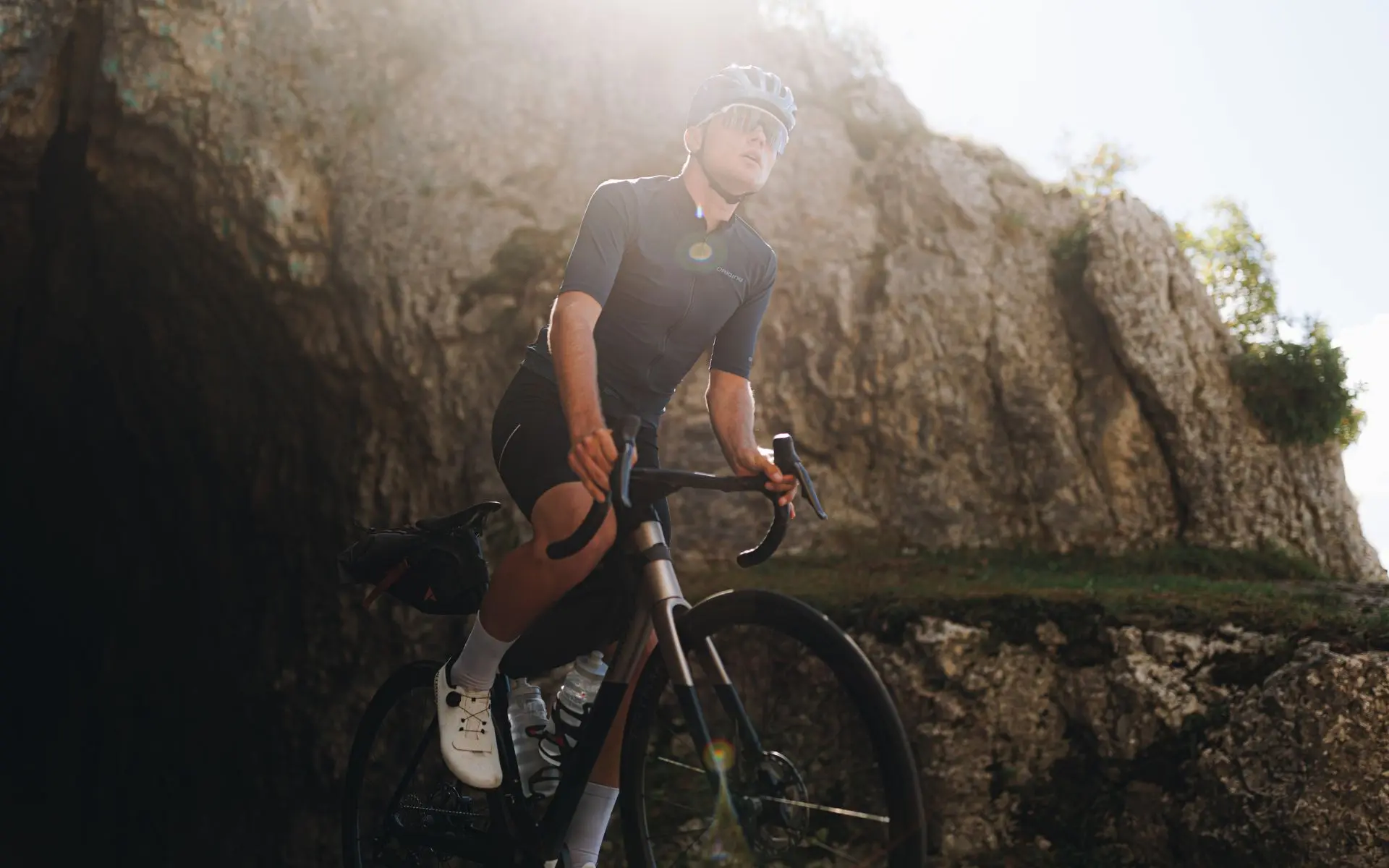
Physical preparation is the cornerstone of success in ultracycling. Gradually increase the distance of your training rides to get your body used to long distances. Start with regular 100km rides, then 120, 150, 180, and 200km. Completing the 200 km distance is an important milestone, since in a BikingMan event you have 120 hours to cover 1,000 km—that’s 200 km per day. If the weather or your schedule doesn’t always allow you to train as much as you’d like, it’s beneficial to do strength training sessions. Core exercises and stretching are also beneficial for preparing the body before a major event.
Doing sample days
If possible, plan typical race days, aiming for as much elevation gain as possible. Even if there are no mountain passes near your home, build up elevation gain to get your muscles used to this more intense effort at a slower pace. These typical race days also help you determine the nutrition plan that works best for you.
Doing back-to-back sessions
A long-distance race is also a series of sustained efforts. Get used to training by stringing together two or three consecutive days of long rides. Be sure, however, to recover properly between these sessions. This will cause significant physical fatigue, but it’s important to arrive fresh and in top form at the start of your race. Be careful, however, not to go to extremes. Do not replicate the distances of your 500 km race during your preparation weekends.
Ride with panniers
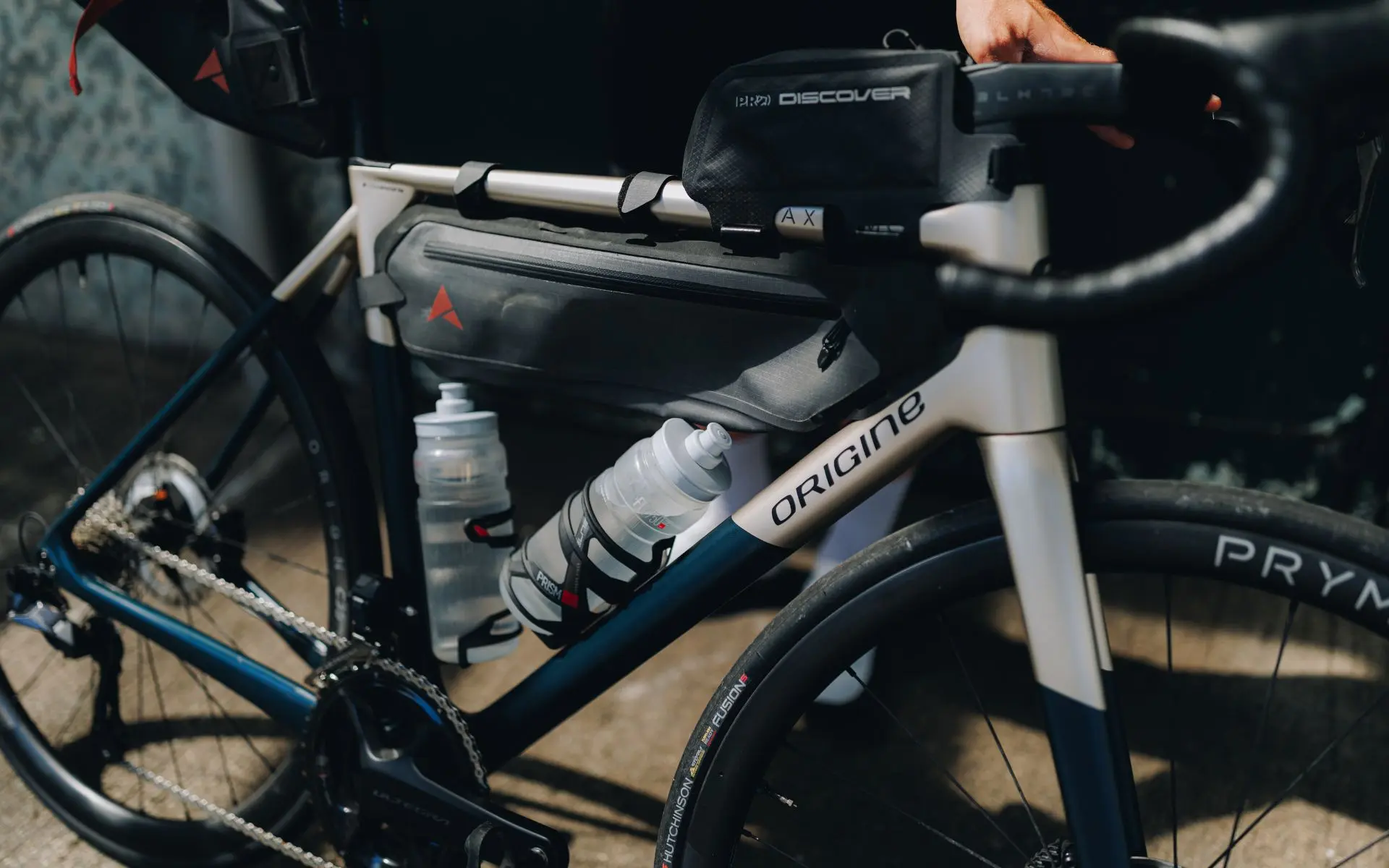
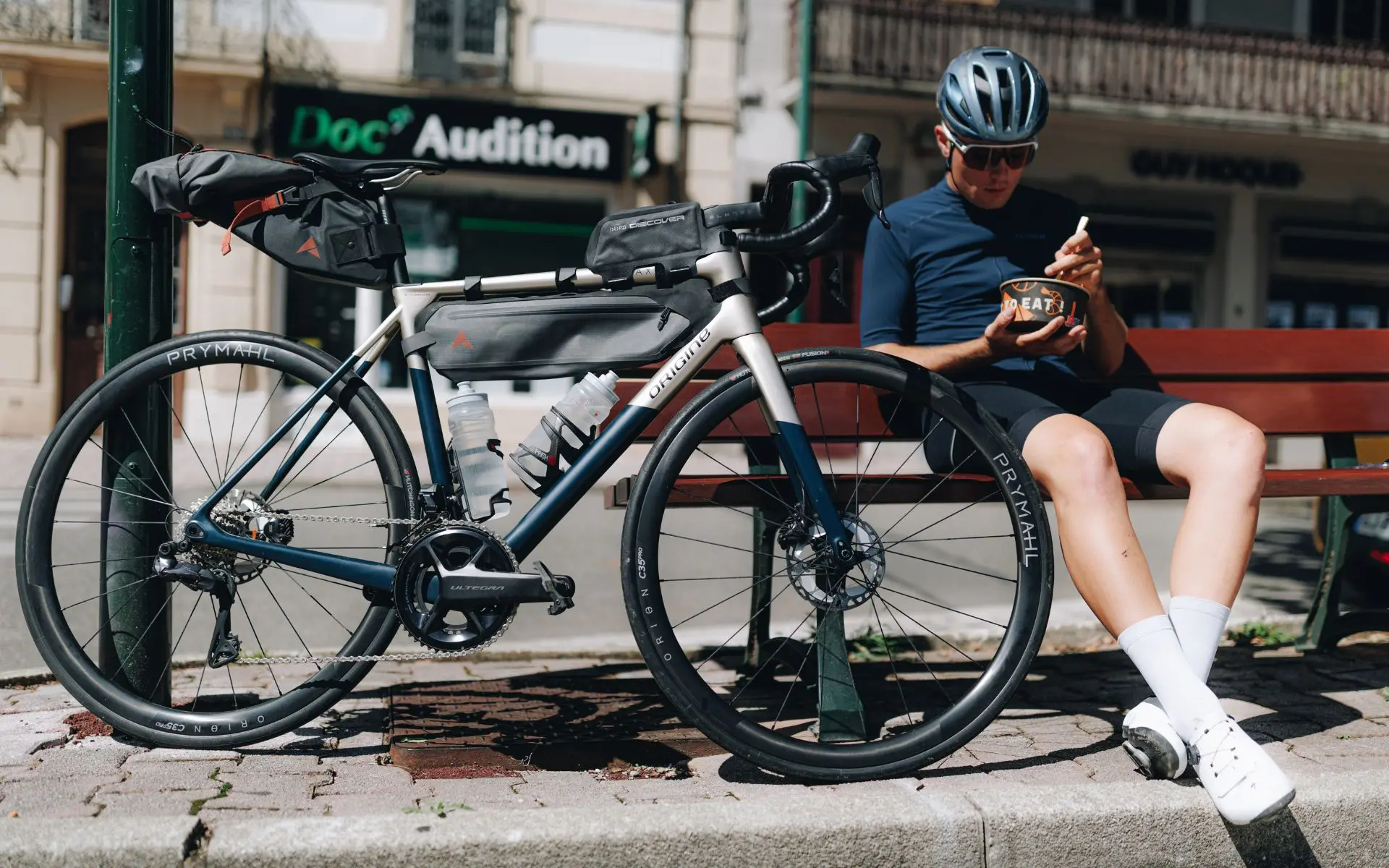
Train with panniers to get used to the extra weight. Handlebar bags make the bike less maneuverable. The saddle bag can cause a rocking motion when riding out of the saddle. A heavily loaded frame bag can cause your knees to splay slightly. It is therefore essential to test your panniers, find the right weight distribution, while ensuring your load is organized so you can quickly access the items you’ll need during the stage.
4. What gear should you bring?
Mandatory equipment
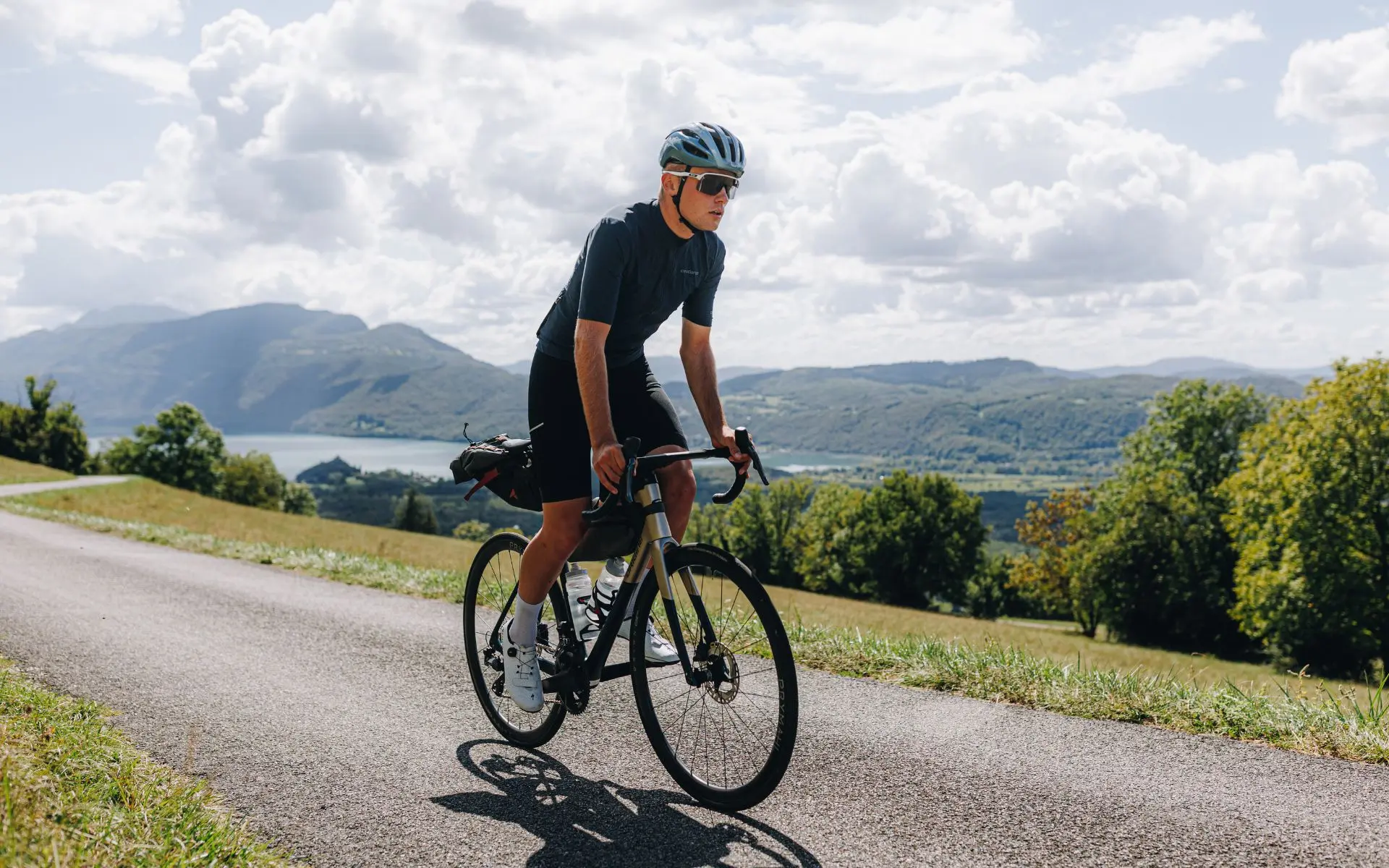
Bring the mandatory gear, even if not all items seem essential to you. The list is designed to ensure your safety in all conditions. It includes, in particular, a survival blanket, a high-visibility vest, at least 1.5 liters of water, gloves, two lights, a set of brake pads, etc.
Food
Also, be generous with the amount of food you bring. There will be sections of the course and nights where you won’t find anything for hours. You’ll therefore need to be self-sufficient in terms of food during these parts of the race. Even though food adds weight to your bike, it’s the fuel you’ll need to keep moving forward. Try to always have a sandwich or a pack of cookies on hand to get through these stretches where you have no choice but to rely on your own supplies.
Warm Clothing
Likewise, warm clothing is essential, especially during nights at high altitudes where temperatures can drop significantly. Weather reports from the week before the race can be a good indicator. Be sure to check the weather conditions at different points along the route, at different altitudes, and at different times of day to account for all possible scenarios. Finally, keep in mind that due to fatigue or if you stop to sleep by the roadside, you’ll feel colder than usual. So be sure to pack plenty of warm clothing.
Basic repair kit
Make sure you have everything you need to take care of both yourself (anti-chafing cream, sunscreen, lip balm) and your bike (quick-release skewer, chain tool, inner tube, brake pads). Follow tutorials and practice basic repairs at home under ideal conditions. Stress, fatigue, or weather conditions can make repairs more complicated in the field. Repeating a procedure you’ve already done at home under ideal conditions will help you during these challenging moments.
Remember that, symbolically, “you carry the weight of your fears.” During your first race, you’ll likely bring unnecessary items. That’s okay. Your first race—and the second and third—will be opportunities to learn and shed some of those fears.
5. Which bike should you choose?
Endurance, comfort, or gravel bike
When it comes to long-distance cycling, comfort is key. Comfort is a performance factor when the hours in the saddle add up. The choice of bike depends largely on the type of race you’ve selected. For challenging gravel races, a gravel bike with a suspension fork may be ideal, whereas a rigid fork is often preferable on the road due to its lightness and precision. Finally, instead of investing heavily in new equipment, it may be more worthwhile to pay for a bike fitting to ensure proper positioning on your bike and thus avoid the risk of discomfort or injury.
Wide tires and low pressure
For road races, opt for wide-profile slick tires, ideally between 30 and 32 mm. Don’t overinflate your tires. Lower pressure helps reduce vibrations, smooth out road imperfections, and ultimately increase comfort. And we can’t say it enough: comfort on long rides is performance. For gravel
riding, the preferred tire width is around 40 mm, with tubeless tires to prevent pinching on impacts and to ensure the sealant can seal even the smallest punctures.
Smooth Gear Ratios
When choosing gear ratios, the ideal is to achieve a 1:1 ratio. This means the largest sprocket is the same size as the smallest chainring (e.g., a 34-tooth chainring with an 11-34 cassette). This ratio allows for one wheel rotation for every pedal rotation. This makes for a very smooth ride on the road, but if you’re riding a 555 gravel bike, you’ll need even more flexibility for long off-road climbs.
Handlebar Extensions
Consider using handlebar extensions to relieve strain on your hands and neck by alternating positions. Nerve compression is a major concern during 50- or 100-hour races. Carpal tunnel syndrome is one of the most common conditions in ultra-cycling. Extensions help relieve tension in this area of the hand. Be careful, however: in races like the BikingMan Euskadi, the course profile is so steep that you won’t have any opportunity to rest on the extensions. It’s therefore a choice you’ll need to make based on the race’s elevation profile and your susceptibility to loss of sensation in your hands and neck tension.
6. What race strategy should you adopt?
Start Slowly
Race pacing is an essential aspect of ultracycling. Start slowly to conserve your energy. Don’t be afraid to let others pass you on the first day. You’ll see most of the “speed demons” from the first day again the very next morning. Remember that you’re in for several hundred kilometers. Conserve your energy as much as possible, let the initial euphoria pass, and try to find the pace you had at the end of your 200km training rides. That’s the right pace. Pick up the pace in the final third of the course if you’re able to.
Nutrition and Hydration
Eat regularly from the very start. Don’t wait until you’re hungry to start consuming calories. Eat small amounts regularly, alternating between sweet and savory foods to avoid feeling full. It’s also a good idea to eat what you enjoy. This boosts your morale and provides mental energy. Avoid energy gels, which may cause stomach upset after a few hours.
Never ride without water. It’s better to lose 2 minutes refilling your water bottles—even if they’re already ¾ full—than to run out of water for 2 hours while climbing an uninhabited mountain pass. In bakeries and convenience stores, you’ll often find cans that fit in your jersey pocket and are perfect for a quick energy boost along the way.
Stay safe
Stay visible on the road, and take advantage of the checkpoints (CP) to eat a hot meal. The Race Angels will be your guardian angels, welcoming you at the checkpoints. This will be your chance to recharge your electronic devices, eat, refill your water bottles, change clothes if needed, and sleep.
Manage your sleep
Speaking of sleep, if you want to achieve the best possible time, you’ll have to deal with short nights of sleep. To do so, you’ll discover the benefits of micro-naps to maintain your focus. Sleeping, even for just 5 or 10 minutes, helps clear the feeling of sleepiness. These strategies will help you manage the race more effectively and maximize your performance.
7. How do you recover after the race?
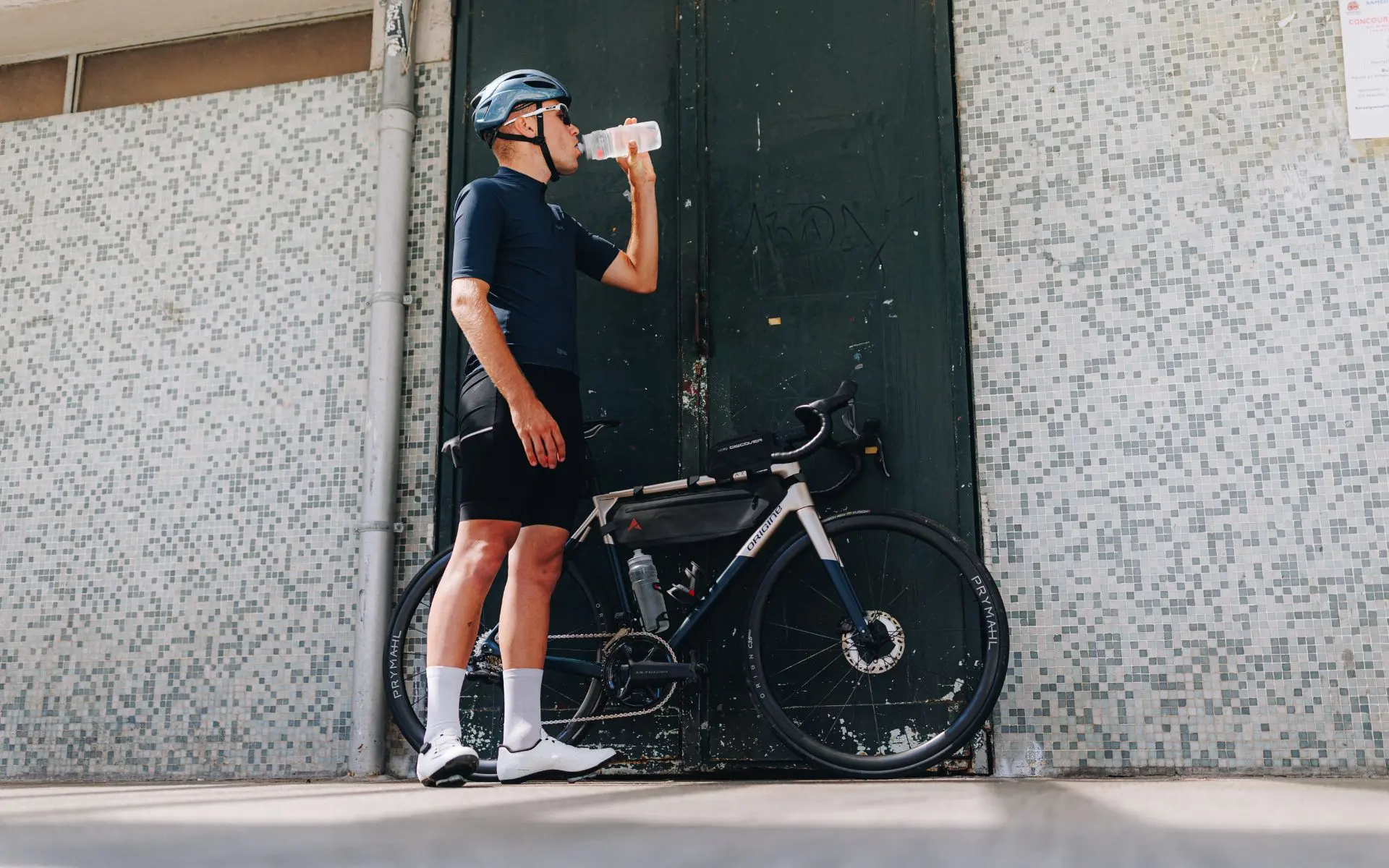
Once you cross the finish line, recovery becomes a priority. Hydrate thoroughly to make up for fluid loss during the race, treat any injuries, and be mindful of post-event physical and psychological effects. Spend time with loved ones to share your experience, give yourself the time needed to fully recover, and remember that completing one ultracycling event a year is already a remarkable achievement. Still, keep up some light activity so you don’t fall into a rut. This also helps improve recovery. This activity doesn’t necessarily have to be cycling. In any case, don’t force yourself to return to training. Wait until the desire to ride comes back.
In conclusion, successfully completing your first ultracycling event is a challenge that requires meticulous preparation at every level. Follow these detailed tips to choose the right race, prepare mentally and physically, pack the right gear, select the right bike, manage the race effectively, and recover optimally. This comprehensive approach will help you turn your ultracycling dream into a reality. Happy riding!
Authors: Amélie Plennevaux and Quentin Guignard